Types of arthritis
Primary forms of arthritis:
• Osteoarthritis
• Rheumatoid arthritis
• Septic arthritis
• Gout and pseudo-gout
• Juvenile idiopathic arthritis
• Still's disease
• Ankylosing spondylitis
RHEUMATOID ARTHRITIS
Rheumatoid arthritis is a disorder where, for some unknown reason, the body's own immune system starts to attack body tissues. The attack is not only directed at the joint but to many other parts of the body. In rheumatoid arthritis, most damage occurs to the joint lining and cartilage which eventually results in erosion of two opposing bones. Rheumatoid arthritis affects joints in the fingers, wrists, knees and elbows. The disease is symmetrical and leads to severe deformity in a few years.
Rheumatoid arthritis occurs mostly in people aged 20 and above. In children, the disorder can present with a skin rash, fever, pain, disability, and limitations in daily activities. No one knows why rheumatoid arthritis occurs and all treatments are focused on easing the symptoms. With earlier diagnosis and aggressive treatment, many individuals can lead a decent quality of life. The drugs to treat rheumatoid arthritis range from corticosteroids to monoclonal antibodies given intravenously. The latest drugs like Remicade can significantly improve quality of life in the short term. In rare cases, surgery may be required to replace joints but there is no cure for the illness. 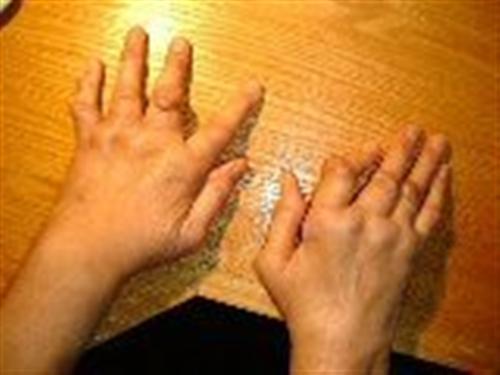
Rheumatic fever has now seen resurgence in America primarily because of mass immigration of people from developing countries. The disorder can present with a migratory nature of arthritis with many other features like heart problems, skin rash, gait abnormality and skin nodules.
OSTEOARTHRITIS
Unlike rheumatoid arthritis, osteoarthritis affects larger joints of the body, like the back, hip or knee. The disease is essentially one acquired from daily wear and tear of the joint. Osteoarthritis begins in the cartilage and eventually leads to the two opposing bones eroding into each other. Initially, the condition starts with minor pain while walking but soon the pain can be continuous and even occur at night. The pain can be debilitating and prevent one from doing any type of activity. Osteoarthritis typically affects the weight bearing joints like the back, spine and pelvis. Unlike rheumatoid arthritis, osteoarthritis is a disease of the elderly. More than 30 percent of females have some degree of osteoarthritis by age 65.
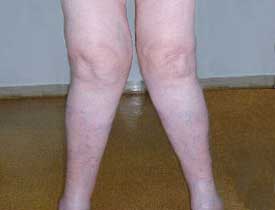
Risk factors for osteoarthritis:
• Prior joint trauma
• Obesity
• Repetitive joint use
• Sedentary lifestyle
Osteoarthritis, like rheumatoid arthritis, cannot be cured but one can prevent the condition from worsening. Weight loss is the key to improving symptoms and preventing progression. Physical therapy to strengthen muscles and joints is very helpful. Pain medications are widely required by individuals with osteoarthritis. When the disease is far advanced the pain the continuous, surgery may be an option. Unlike rheumatoid arthritis, joint replacement does help many individuals with osteoarthritis.
JUVENILE ARTHRITIS
The most prevalent form of juvenile arthritis is juvenile rheumatoid arthritis, or JRA. It affects approximately 50,000 children in the United States. JRA also called juvenile idiopathic arthritis (JIA) because it is very different from adult rheumatoid arthritis.There is also an uncommon form of gout caused by the formation of rhomboid crystals of calcium pyrophosphate. This gout is known as pseudogout. In the early stages, the gouty arthritis usually occur in one joint, but with time, it can occur in many joints and be quite crippling. The joints in gout can often become swollen and lose function.
ANKYLOSING SPONDYLITIS
Ankylosing spondylitis previously known as Bechterew's disease, Bechterew syndrome, and Marie Strümpell disease, a form of Spondyloarthritis, is a chronic, inflammatory arthritis and autoimmune disease. It mainly affects joints in the spine and the sacroilium in the pelvis, and can cause eventual fusion of the spine.
It is a member of the group of the spondyloarthropathies with a strong genetic predisposition. Complete fusion results in a complete rigidity of the spine, a condition known as bamboo spine.
GOUT
Gout is caused by deposition of uric acid crystals in the joint, causing inflammation. 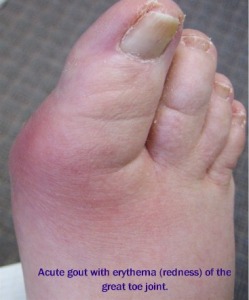
Severe Arthritis
Arthritis is a painful disorder but in some individuals it progresses and causes severe deformities. The majority of individuals with severe rheumatoid arthritis will have deformities of their fingers. The deformity may also occur in the wrist joint due to a loss of cartilage and with time, it may be impossible to move the wrist joint. Other problems with severe arthritis include entrapment of the nerve in the wrist leading to the carpal tunnel syndrome. With time these fingers will have diminished sensation, loss of muscle and one may not be able to use the fingers.
Infectious arthritis is another severe form of arthritis. It presents with sudden onset of chills, fever and joint pain. The condition is caused by bacteria elsewhere in the body. Infectious arthritis must be rapidly diagnosed and treated promptly to prevent irreversible and permanent joint damage.
PSORIASIS is another very severe type of arthritis. With psoriasis, most individuals develop the skin problem first and then the arthritis. The typical features are of continuous joint pains, stiffness and swelling. The disease does recur with periods of remission but there is no cure for the disorder. A small percentage develop a severe painful and destructive form of arthritis which destroys the small joint in the hands and can lead to permanent disability and loss of hand function
Secondary to other diseases
• Ehlers-Danlos Syndrome
• Sarcoidosis
• Henoch-Schönlein purpura
• Psoriatic arthritis
• Reactive arthritis
• Haemochromatosis
• Hepatitis
• Wegener's granulomatosis (and many other vasculitis syndromes)
• Lyme disease
• Familial Mediterranean fever
• Hyperimmunoglobulinemia D with recurrent fever
• TNF receptor associated periodic syndrome
• Inflammatory bowel disease (Including Crohn's Disease and Ulcerative Colitis)
Diseases that can mimic arthritis include:
• Hypertrophic osteoarthropathy
• Multiple myeloma
• Osteoporosis
• Fifth disease (parvovirus infection)
Infectious arthritis
Gonococcal arthritis - caused by gonorrhea
Parvovirus arthritis - caused by parvovirus
Reactive arthritis - occurring after an infection.
Reiter’s syndrome
Gout
CURABLE TYPE OF ARTHRITIS
Polyarteritis nodosa
Whipple disease
SLE
Polymyalgia rheumatica
Myopathies
Myocarditis related arthritis
Scleroderma related arthritis
Arthritis associated with psoriasis
Reiter's syndrome
Felty syndrome
Carpel tunnel syndrome
RARE TYPE OF ARTHRITIS
Amyloidosis
Polyarteritis nodosa
Whipple disease
Paraneoplastic syndrome
SLE
Polymyalgia rheumatica
Myopathies
Myocarditis related arthritis
Scleroderma related arthritis
Arthritis associated with psoriasis
Reiter's syndrome
Cauda equina syndrome
Felty syndrome
Carpel tunnel syndrome
